
Oboro no Ichi Resource Management: Production to Sales Guide
Quick answer
Start the Oboro no Ichi resource management loop by placing production structures, connecting them so their output supplies your stalls, and letting the stalls sell to the spirits that drift through your market. That three-stage cycle — produce, supply, sell — is the confirmed core of the game, and every expansion decision hangs off it.
| Release date | Nov 9, 2026, launching into Early AccessOboro no Ichi on Steam |
|---|---|
| Core loop | Produce resources, supply stalls, manage sales, raise appeal to welcome more spiritsOboro no Ichi on Steam |
| Platforms | Windows and macOS via Steam; Steam Deck listed as PlayableOboro no Ichi on Steam |
| Early Access length | Approximately 6-12 months, per the developerOboro no Ichi on Steam |
How Oboro no Ichi resource management works: place production structures, connect them so output supplies your stalls, and sell to the drifting spirits.
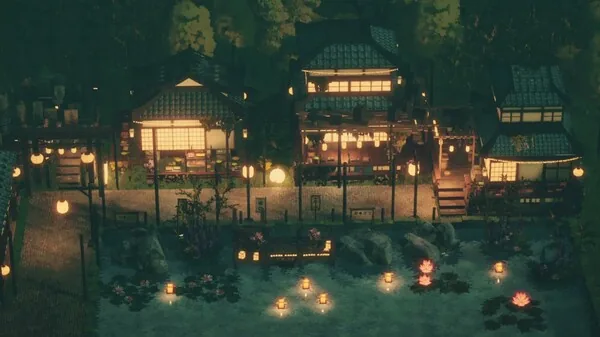
Table of Contents
Start the Oboro no Ichi resource management loop by placing production structures, connecting them so their output supplies your stalls, and letting the stalls sell to the spirits that drift through your market. That three-stage cycle — produce, supply, sell — is the confirmed core of the game, and every expansion decision hangs off it.
One important caveat up front: the game unlocks in Early Access on Nov 9, 2026, so the details below come from the official Steam page, the developer's Early Access notes, and early community feedback rather than a full-release guide. Exact recipes, prices, and throughput numbers will be filled in as players get hands-on time.
The loop, stage by stage
The developer describes the gameplay as "a simple yet deep loop" with each structure filling a specific role. Broken into its three stages, it looks like this:
- Production. Certain buildings exist to make resources. These are the input side of your economy; without them, your stalls have nothing to sell.
- Supply. Production output feeds your stalls. The store page states that each structure "has a specific role: produce resources, supply your stalls," meaning the connection between a producer and the stall it stocks is a deliberate design choice, not automatic background noise.
- Sales. Stalls sell to the wandering spirits visiting your market. Selling is how you grow, and how you "increase its appeal to welcome more and more spirits."
The cycle then feeds itself: more sales fund expansion, expansion raises appeal, higher appeal brings more spirits, and more spirits buy more goods. The developer calls it "a relaxing cycle that is easy to grasp, yet full of choices, strategies, and combinations."
Organizing production
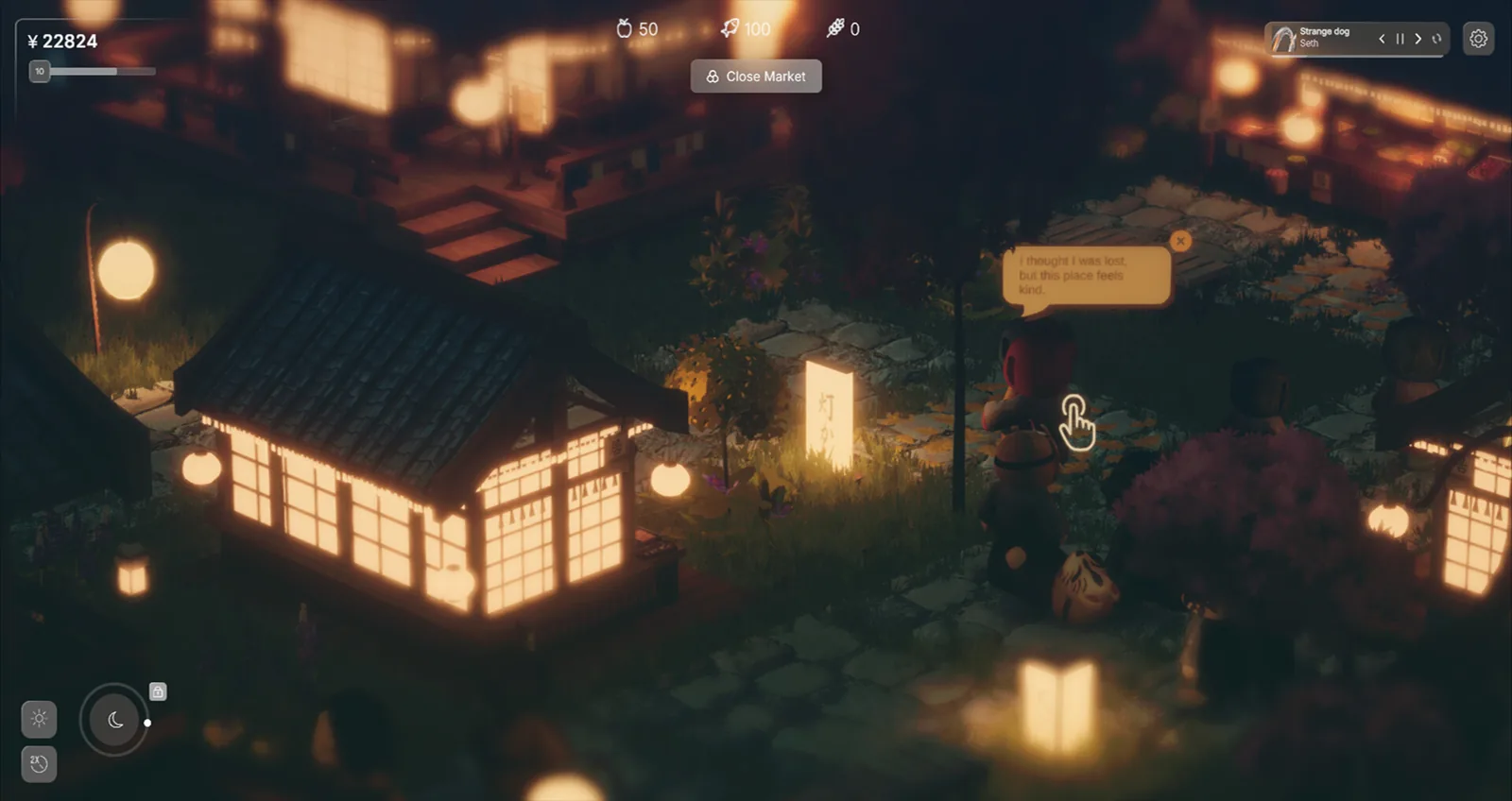
Freeform layout is a headline feature: you "freely design your space, connecting stalls, buildings, and pathways." That freedom cuts both ways for production planning:
- Place producers where their output can reach stalls. The demo community has already noted on the Steam forums that some buildings must be placed next to a road, so path connections matter for placement, not just looks.
- Balance beauty and functionality. The official description explicitly asks you to "find the right balance between beauty and functionality" — appeal is a growth resource, so a purely optimized grid may cost you spirit traffic, and a purely pretty market may starve its stalls.
- Expand one step at a time. The developer's stated pacing is to "grow your market one step at a time," adding capacity as sales demand it rather than building everything up front.
Supplying your stalls
Supply is the middle link, and it is where the management depth lives. Stalls are the point of contact with customers, so a stall that runs dry during market hours is wasted appeal. The practical approach the material supports:
- Match what your producers make to what your stalls sell. The store page frames the whole game around this pairing, and spirits "trade away their memories" at the market, so what you stock shapes who lingers.
- Treat connections as part of the design. The game emphasizes "connecting stalls, buildings, and pathways to create a lively and harmonious place," which suggests supply routes are something you draw, not something the game solves for you.
Managing sales and growing appeal
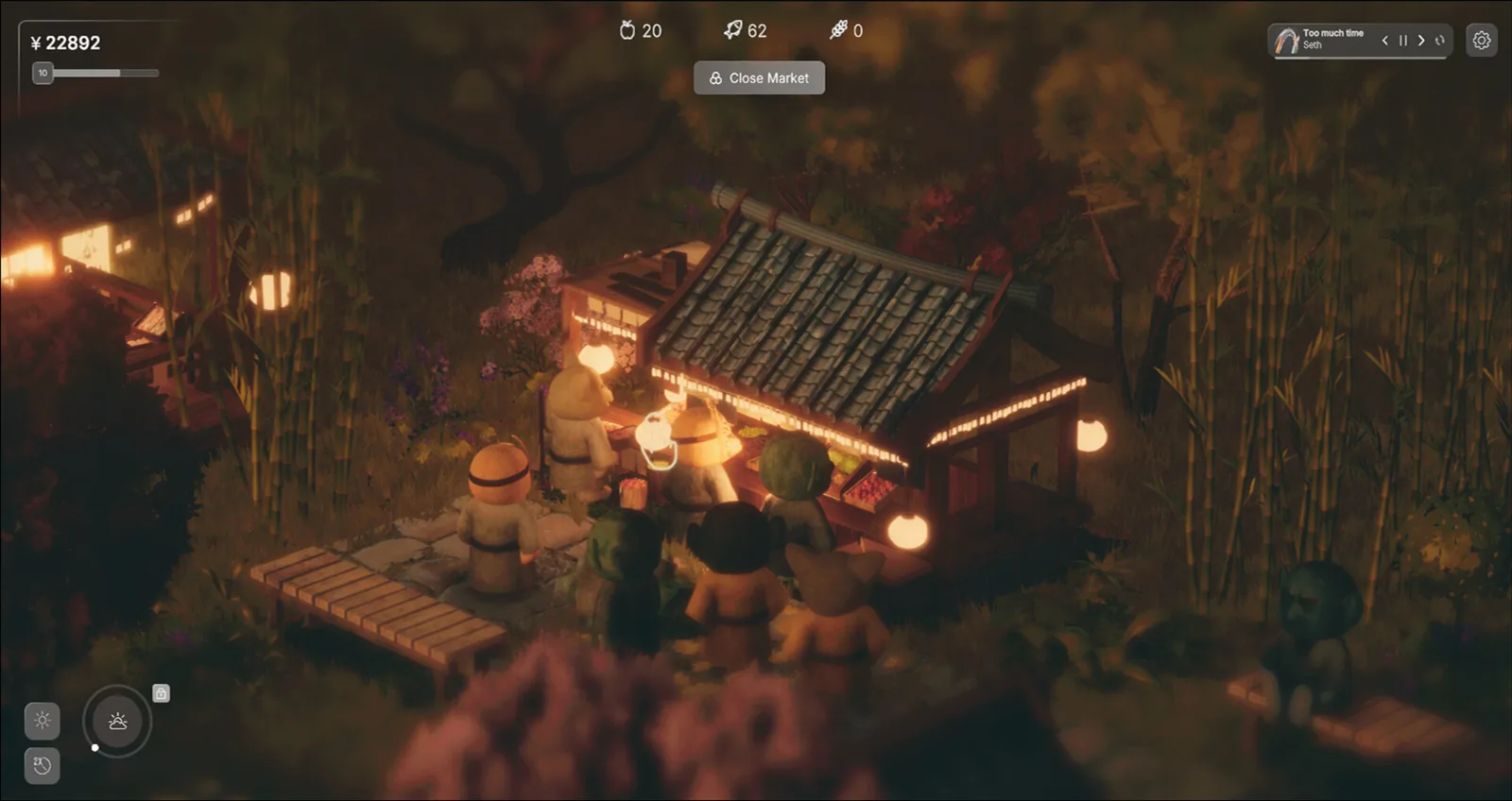
Sales are the growth engine. The official pitch for the loop is: "Organize production, manage sales, expand your market, and increase its appeal to welcome more and more spirits." Three things follow from that sentence:
- Sales drive appeal, and appeal is what converts your market from a quiet corner into a destination. More appeal means more wandering spirits arriving.
- Expansion is continuous. Early Access will add "new items and structures" and "deeper events and gameplay dynamics during market hours," so the sales layer is designed to grow more involved over the roughly 6–12 months of Early Access the developer expects.
- There is no time pressure. The developer stresses "there is no rush" — you can reorganize production, rework supply lines, and reprice or restock at your own pace, and the game supports Save Anytime and Adjustable Difficulty per the official accessibility listing.
Getting started before release
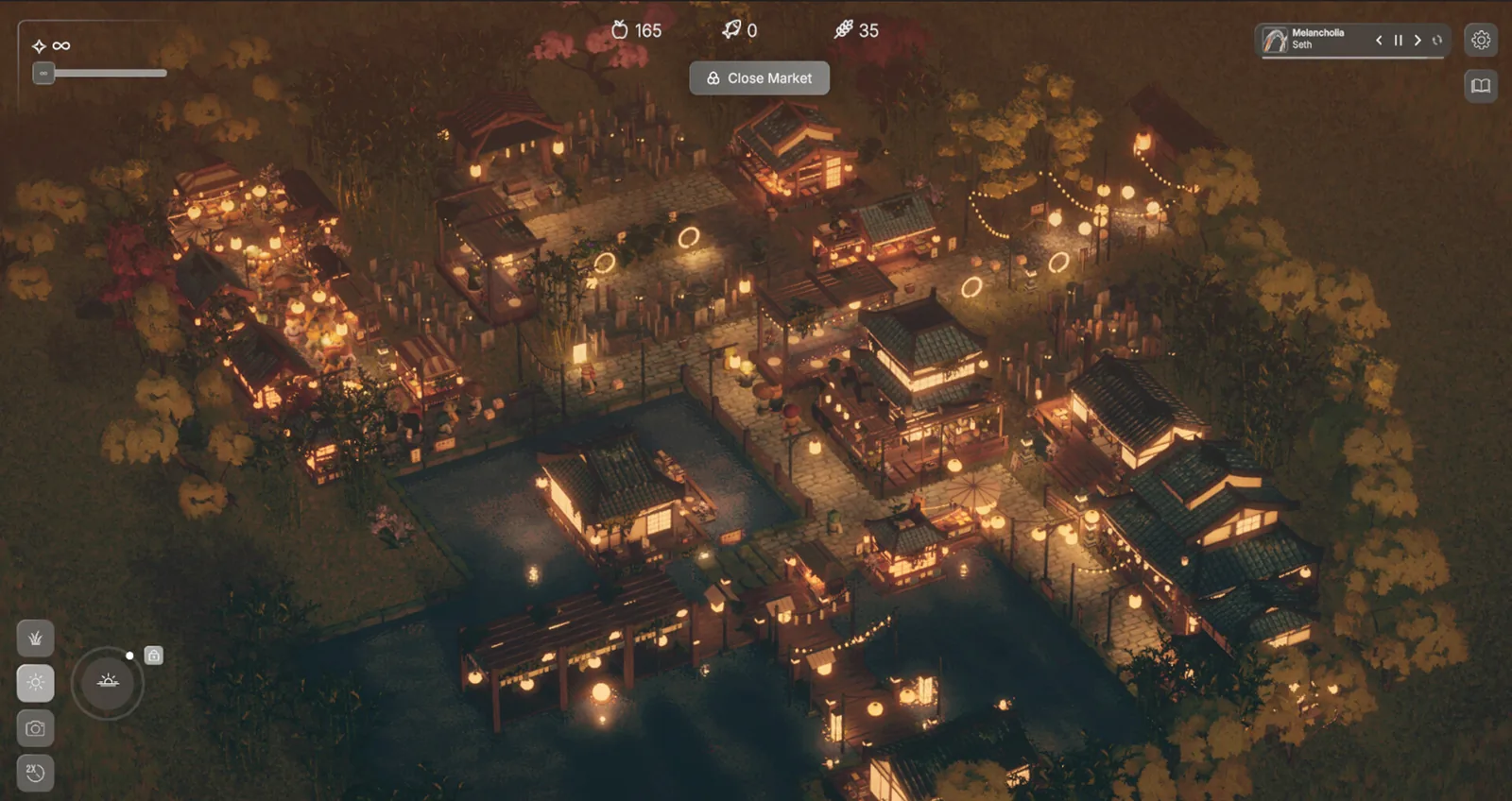
A demo is already downloadable from the Steam page, and it contains the full core loop — the developer states the Early Access build lets you "build and manage your market, connect structures, produce and sell resources, and welcome spirits." The demo is the fastest way to learn the production-to-sales flow hands-on. Early Access will launch at a discounted price, per the developer's FAQ.
- Place at least one production building near a road connection.
- Connect its output to a stall so the stall is stocked.
- Let spirits trade at the stall and watch your market's appeal rise.
- Reinvest into more producers and stalls as more spirits arrive.
- Keep the layout attractive — appeal is part of the growth formula, not decoration.
What is not yet confirmed
Because the game is still pre-release, nothing below the framework level is verified: no resource types, production rates, prices, stall capacities, or appeal thresholds have been published anywhere in the official material, and there are no player economy write-ups yet. The demo's own limits were also noted by community posters, who hope the full version loosens placement restrictions. Treat any specific number you see elsewhere as unconfirmed until the game is out and players can test it.
FAQ
When does Oboro no Ichi release?
Nov 9, 2026, launching into Early Access on Steam. The developer expects roughly 6–12 months of Early Access before the full version.
Is there a demo I can try the production and sales loop in?
Yes. A downloadable demo is available on the official Steam page, and per the developer it already includes the full core loop: building, connecting structures, producing and selling resources, and welcoming spirits.
What platforms does Oboro no Ichi support?
As of Nov 3, 2026, the official Steam page lists Windows and macOS only, with Steam Deck marked Playable. No console versions are listed.
How does Oboro no Ichi resource management scale in Early Access?
The developer plans to add "new items and structures" and "deeper events and gameplay dynamics during market hours" over the Early Access period, so the produce-supply-sell loop is the stable base that new systems will build on.
Check note: facts here come from the official Steam store page (release date, platforms, loop description, Early Access FAQ) and the Steam Community hub (early demo player reports on building rotation and a cursor bug). Specific resource types, rates, and prices remain unconfirmed until players have the full game.
Related guides for this game
Media Guides Index
Oboro no Ichi Devlog: Catch Up on Every Update So Far
See what the Oboro no Ichi devlog covers so far: Devlog 1's origin story, its world of Kakuriyo and Tokoyo, and why promised Devlog 2 has not appeared yet.
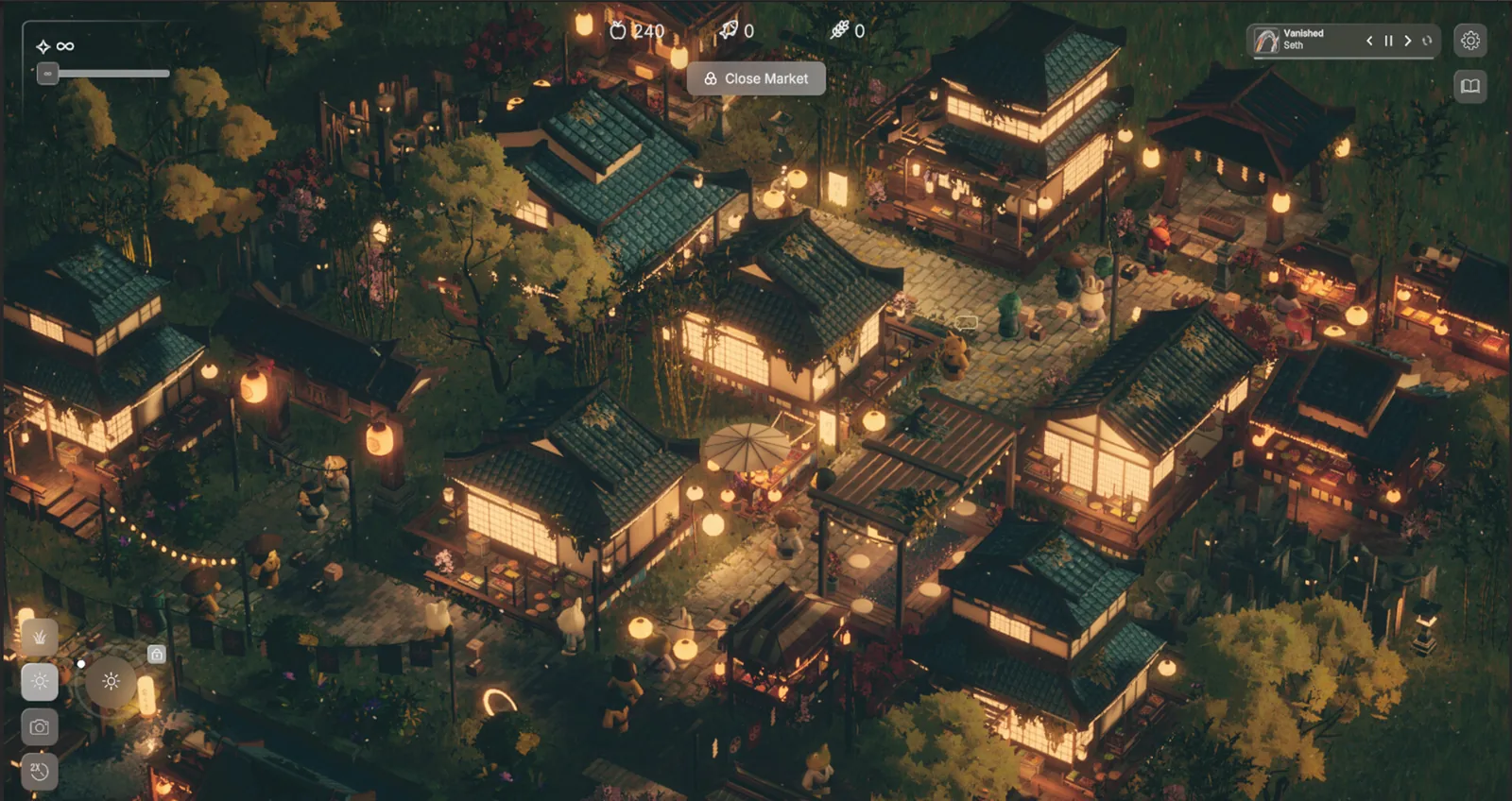
Oboro no Ichi Gameplay: How the Market Loop Works
Oboro no Ichi gameplay explained: build stalls, connect production, sell resources and welcome spirits, plus what the demo already lets you try today.
Platforms Guides Index
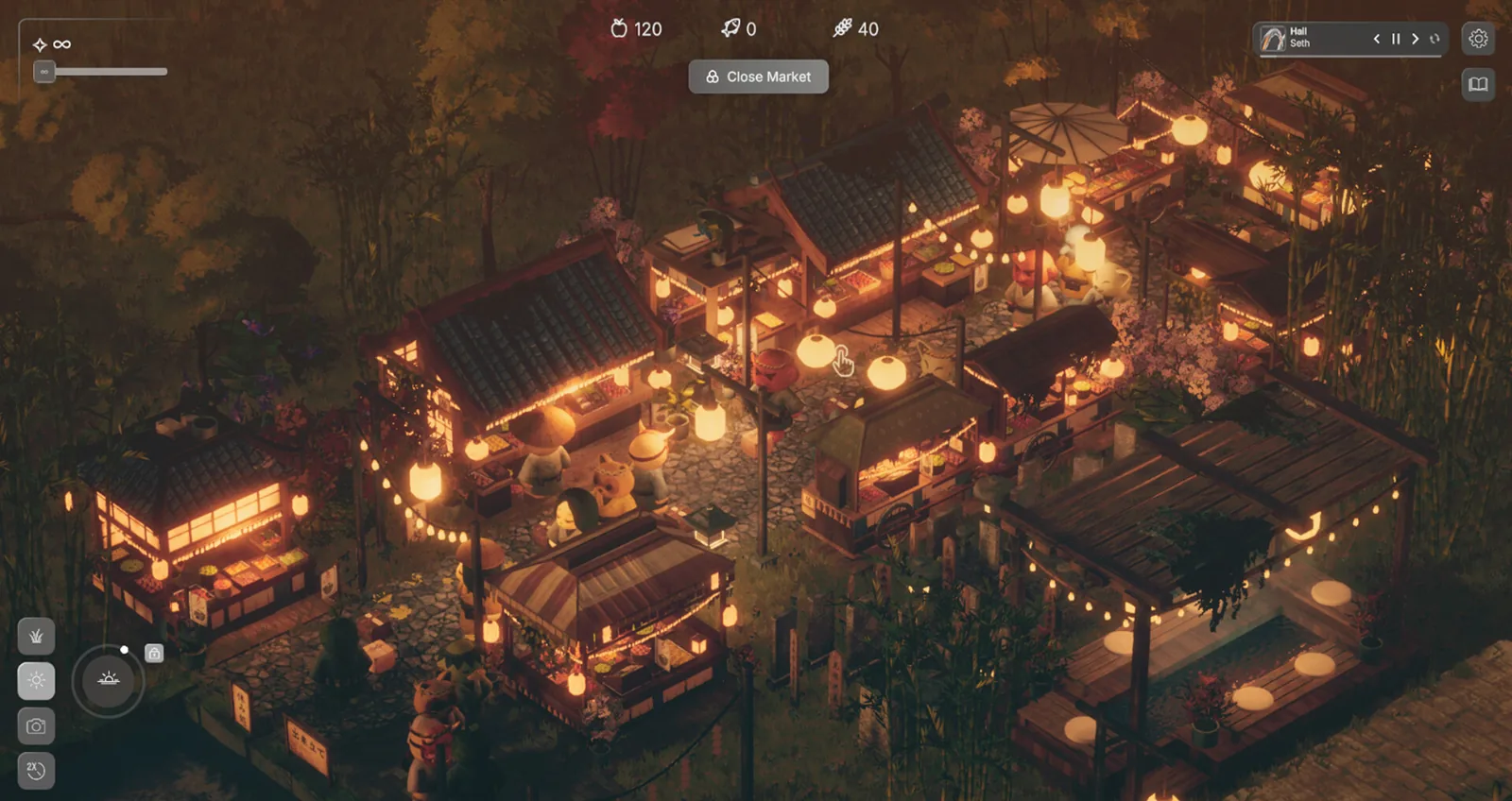
Does Oboro no Ichi Mac Support Exist? macOS Requirements
Oboro no Ichi mac support is confirmed on Steam, with a native macOS release planned for the Nov 9, 2026 Early Access launch. Find the full details here.
Oboro no Ichi platforms: full list of supported systems
Oboro no Ichi platforms explained: the cozy market builder runs on Windows PC, macOS and Steam Deck, with requirements and demo details for each system.

Oboro no Ichi Steam Page: Where to Find and Wishlist It
Oboro no Ichi steam page is live (app 4559930), listing a planned November 9, 2026 Early Access release. The game is not purchasable yet, so wishlist it
Release Guides Index
Oboro no Ichi Early Access: Release, Content, Price
Oboro no Ichi early access launches Nov 9, 2026 with the full core loop and lasts 6-12 months at a discounted price. See what is in and what comes later.