
Oboro no Ichi Gameplay: How the Market Loop Works
Quick answer
The fastest way to experience Oboro no Ichi gameplay right now is to download the free demo from the official Steam page, because the full game only unlocks on Nov 9, 2026. The demo already covers the entire core loop the developer describes: you design a spiritual night market, connect production buildings to the stalls that sell their goods, and make the market appealing enough that wandering spirits drift in and stay.
| Core loop | Organize production, manage sales, expand the market, and increase its appeal to welcome more spiritsOboro no Ichi on Steam |
|---|---|
| Structure roles | Each structure has a specific role: produce resources, supply your stalls, grow the market step by stepOboro no Ichi on Steam |
| Early Access state | Building, management and the gameplay loop are already fully playable; full release planned Nov 9, 2026 after roughly 6–12 months of Early AccessOboro no Ichi on Steam |
| Placement rule reported by players | Some buildings must be placed touching a road, and building rotation is not obvious in the demoOboro no Ichi Steam Community |
| Platforms | Windows and macOS; Steam Deck marked PlayableOfficial Steam store page |
Oboro no Ichi gameplay explained: build stalls, connect production, sell resources and welcome spirits, plus what the demo already lets you try today.
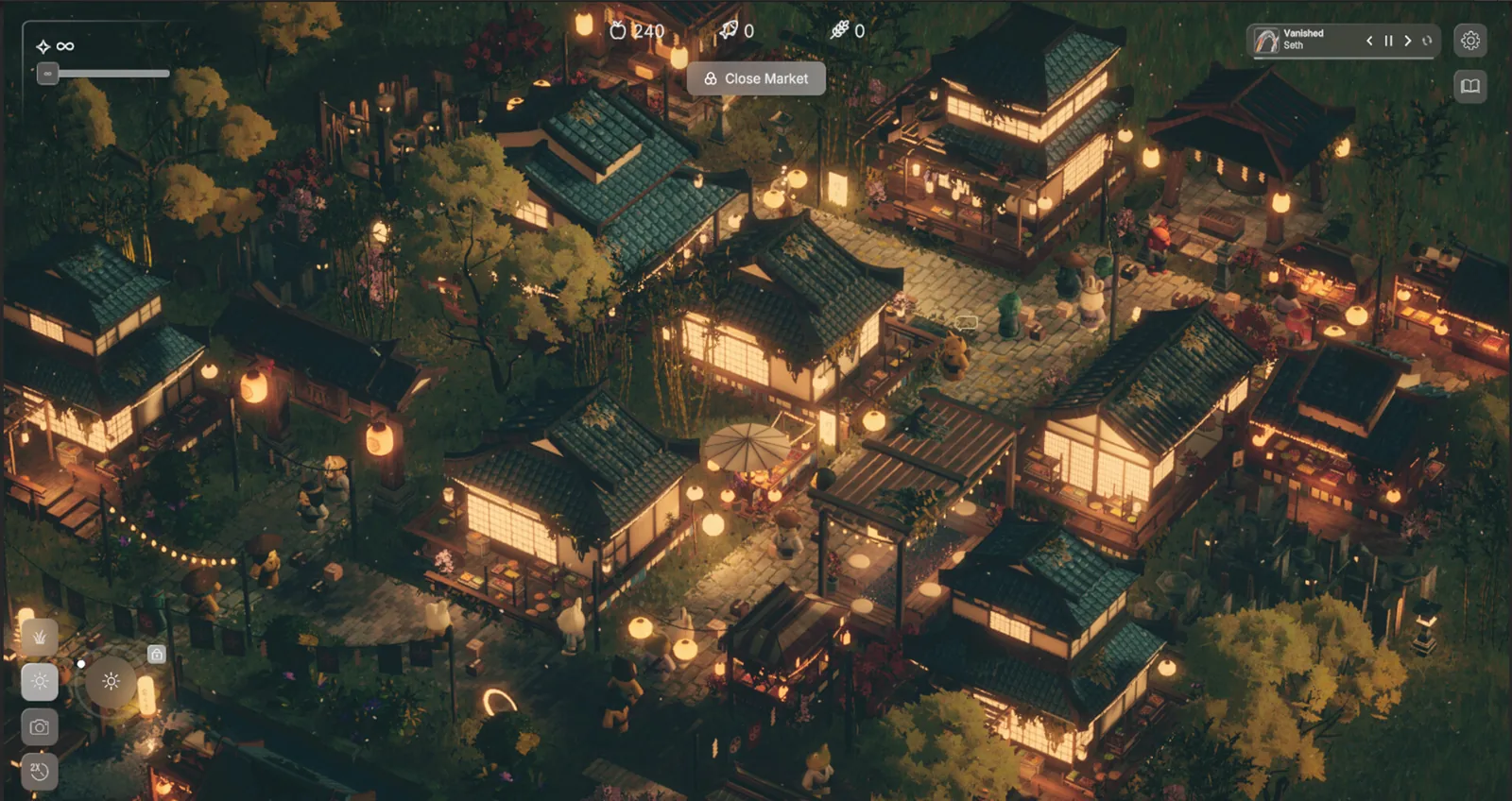
Table of Contents
The fastest way to experience Oboro no Ichi gameplay right now is to download the free demo from the official Steam page, because the full game only unlocks on Nov 9, 2026. The demo already covers the entire core loop the developer describes: you design a spiritual night market, connect production buildings to the stalls that sell their goods, and make the market appealing enough that wandering spirits drift in and stay.
The setting you are building in
Oboro no Ichi is a cozy market-building game by solo developer TheLaba, set in a market suspended between memories where lost souls seek peace. It continues the world of Midori no Kaori, but with a softer goal: instead of helping souls follow a path, this game is about accepting, letting go, and finding comfort in Kakuriyo.
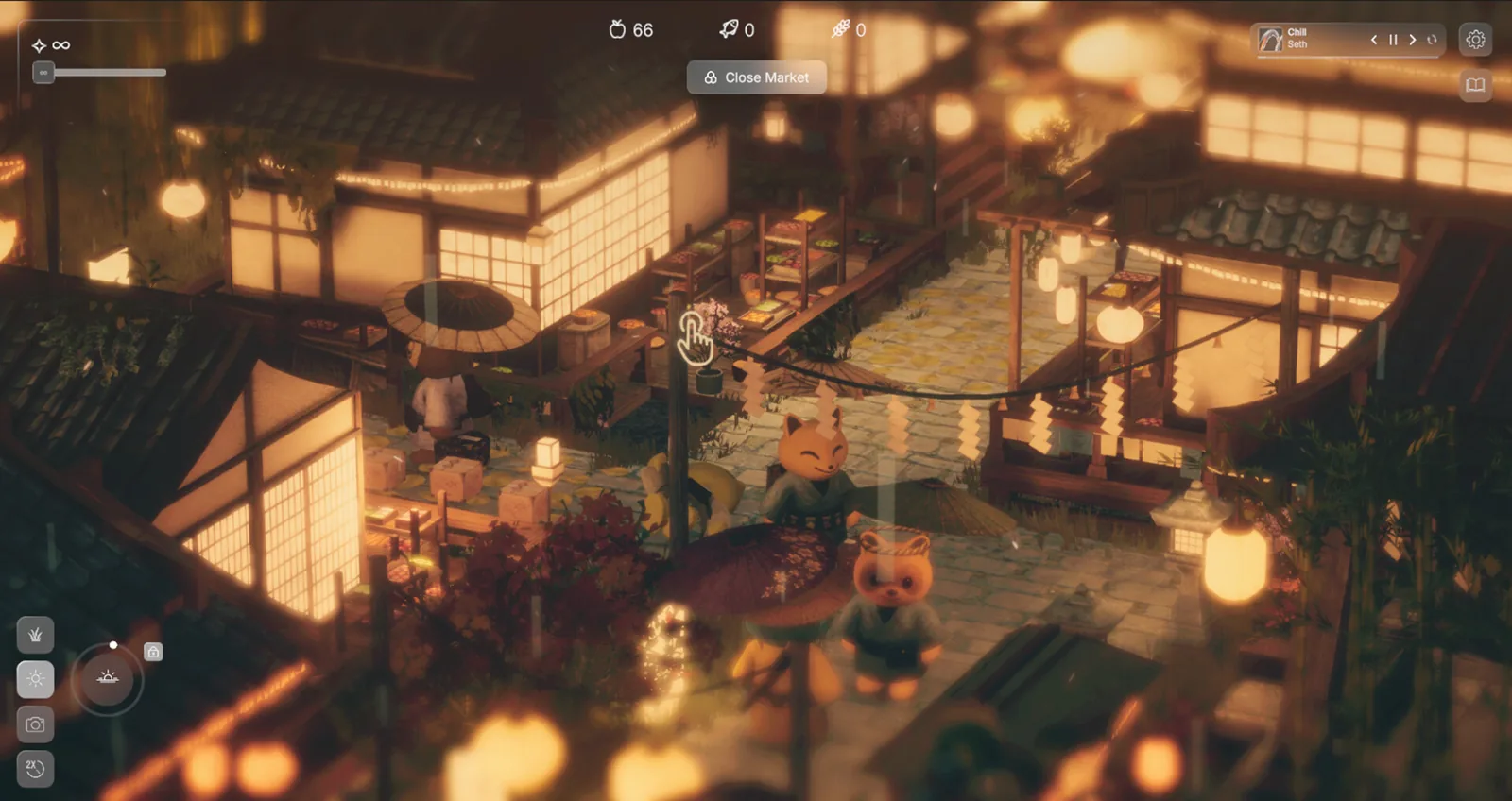
Your market is the place where that happens — spirits drift through it slowly, trade away their memories, and find rest, while your job is to keep the market growing around them. The developer's first devlog describes the project as inspired by peaceful places in Japan and traditional folklore, and as a deliberate attempt to make a game that is a quiet space rather than a stressful one.
The core gameplay loop
The developer summarizes the loop on the store page as a cycle of four moves: organize production, manage sales, expand your market, and increase its appeal so more spirits arrive. Here is how those pieces fit together in practice.
Design and place your structures
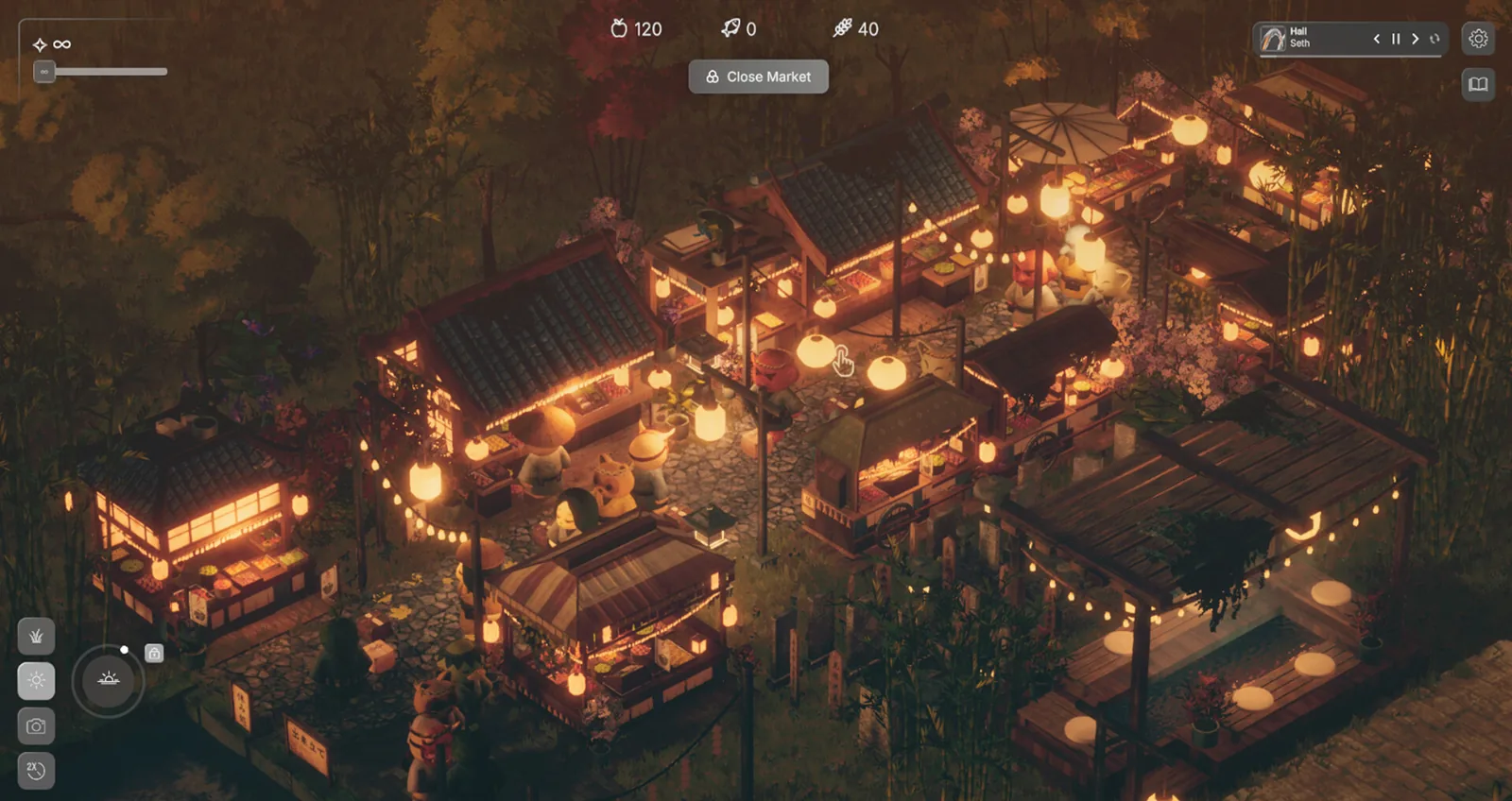
You freely lay out the market by connecting stalls, buildings and pathways. Each structure has a specific role: some produce resources, others supply your stalls, and pathways tie everything into a single harmonious space. The developer stresses finding a balance between beauty and functionality — a market that is only efficient misses the point, and one that is only pretty will not produce.Connect production to sales
Production buildings generate resources, and those resources feed the stalls where the actual selling happens. Growing your market one step at a time means adding the production a new stall needs, or a stall that can use what you already produce, so the chain stays connected.Manage your sales
Once stalls are supplied, you manage sales as part of the ongoing cycle. The developer describes this as a relaxing cycle that is easy to grasp but full of choices, strategies and combinations — the depth comes from which combinations you build, not from pressure or timers.Grow appeal and welcome spirits
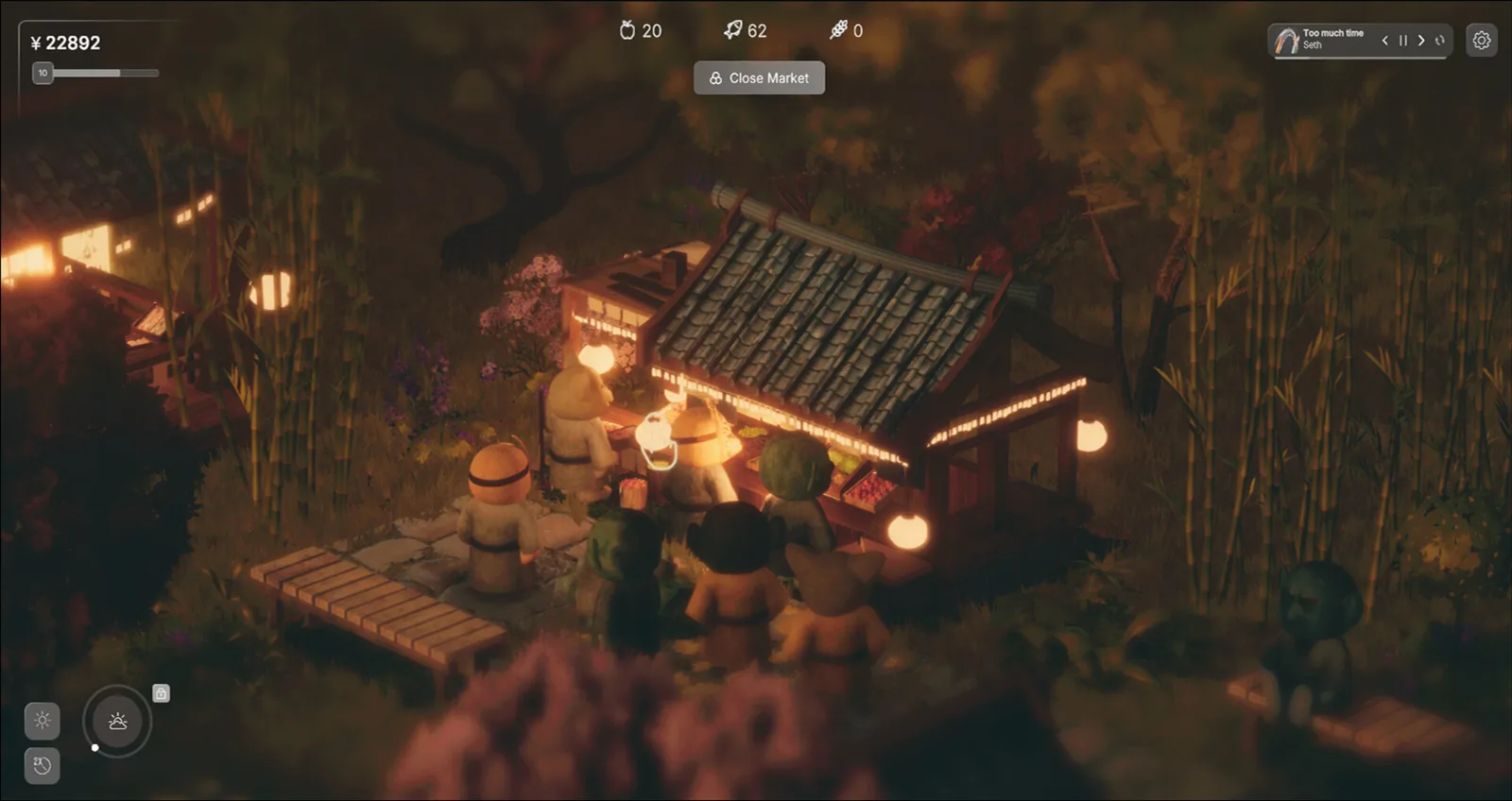
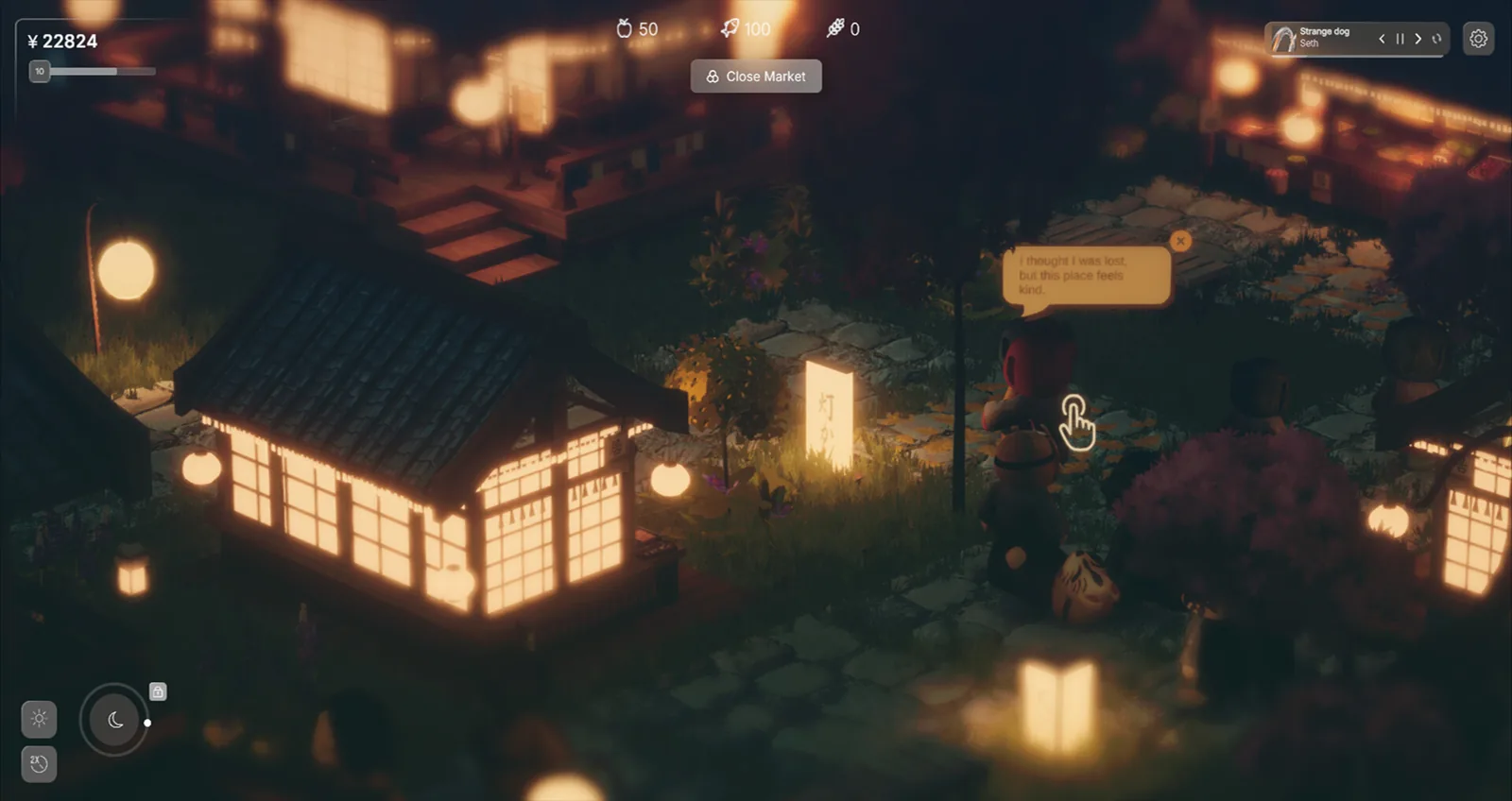
The result of a well-run market is appeal. As your market's appeal increases, more and more wandering spirits arrive to rest and trade their memories. Spirits are both the reward for a good market and the reason it exists.Repeat at your own pace
There is no rush built into the design. The store page's closing pitch is literally "Take your time" — you expand, rebalance, and watch the market grow alongside its spirits, with adjustable difficulty and save-anytime support if you want to shape the pace yourself.
What is playable today versus on Nov 9
The game launches into Early Access on Nov 9, 2026, and the developer's Early Access plan answers the most important version question directly: the Early Access version already includes the full core experience. In the developer's own words, "you can build and manage your market, connect structures, produce and sell resources, and welcome spirits, all within a gameplay loop that is already stable and satisfying." Early Access is expected to last approximately 6–12 months, during which the developer plans to add:
- new interactions with spirits
- expanded market customization options
- new items and structures
- deeper events and gameplay dynamics during market hours
So if you play the demo or buy into Early Access at launch, the complete loop described above is already there; what grows over the following months is content around that loop, not the loop itself. The developer also states the game will be discounted during Early Access, and plans regular development updates and a clear roadmap shaped by community feedback.

Practical notes before you start
A few concrete details affect your first session.
- Some buildings need a road. A player in the Steam community (posting Nov 1) notes that certain buildings can only be placed when touching a road, so plan your pathways early rather than treating them as decoration.
- Rotation is not obvious. The same player asked how to rotate buildings after trying many inputs, so expect placement to feel a bit limited in the demo and hope for more options in the full version.
- A known demo bug. Another player (Oct 12) reports a bug where the cursor drifts to the top-left of the screen in the demo, persisting even with Steam, Discord and Nvidia overlays disabled; they worked around it partly with a controller. If your cursor misbehaves, that discussion thread is the place to compare notes and report it.
- Input and comfort options. The Steam page lists a Mouse Only Option, playable-without-timed-input support, adjustable difficulty and save-anytime, so the loop is playable entirely with a mouse and without reflex pressure.
- Platforms. The official Steam page lists Windows (Windows 10 64-bit, GTX 660-class GPU, 4 GB RAM, 5 GB storage) and macOS (Apple M1, macOS 12.0, 8 GB RAM) — no Linux version is listed as of Nov 3, 2026. Steam Deck compatibility is marked Playable.
How deep the strategy goes
The developer's framing is that the loop is "simple yet deep": easy to grasp, but full of choices, strategies and combinations. The main strategic axis named on the store page is the trade-off between beauty and functionality in how you organize production and sales.
One player who spent time with the demo (Oct 2) describes the experience as leaning heavily into aesthetic curation and atmospheric storytelling rather than being a run-of-the-mill shop-management game — useful expectations if you are coming from stricter economy builders. The community hub is small but active, and the developer has said feedback will directly shape the balance between management depth and cozy atmosphere during Early Access.
If you want the behind-the-scenes context for why the market works the way it does, the developer's first devlog is the best companion read.
Next steps
- Read our Oboro no Ichi devlog summary for the developer's own explanation of the world, the connection to Midori no Kaori, and what "a market between memories" is meant to mean — it frames every system you will be managing.
- Try the free demo on the official Steam page before Nov 9, since it already contains the full build-and-sell loop and is the best way to test the placement and rotation quirks described above.
FAQ
What do you actually do in Oboro no Ichi?
You build and manage a spiritual market inspired by Japan: place stalls, buildings and pathways, organize production, sell resources through your stalls, and grow the market's appeal so more wandering spirits arrive to rest and trade their memories.
Is the Oboro no Ichi gameplay loop complete in Early Access?
Yes, according to the developer's Early Access statement on the Steam page: building, management and the gameplay loop are fully playable and described as stable and satisfying. The 6–12 months of Early Access add new spirit interactions, customization, items and market-hours events on top of that loop.
Is there pressure or a timer, or can I play casually?
There is no rush by design. The developer pitches the game as a calm, cozy cycle, and the Steam features list includes adjustable difficulty, save anytime and playable-without-timed-input, so casual pacing is explicitly supported.
Can I play Oboro no Ichi with just a mouse?
Yes — the official Steam page lists a Mouse Only Option among its input features, alongside adjustable text size, custom volume controls and subtitle options.
Check note: this page is based on the official Steam store page and its Early Access statement, the developer's Devlog 1 announcement, and first-hand player posts on the Steam Community hub (placement, rotation and cursor-bug reports). Exact building rotation controls, production recipes and appeal numbers are not yet confirmed anywhere and will need verification against the full release.
Related guides for this game
Media Guides Index
Oboro no Ichi Devlog: Catch Up on Every Update So Far
See what the Oboro no Ichi devlog covers so far: Devlog 1's origin story, its world of Kakuriyo and Tokoyo, and why promised Devlog 2 has not appeared yet.
Guide Guides Index
Oboro no Ichi Resource Management: Production to Sales Guide
How Oboro no Ichi resource management works: place production structures, connect them so output supplies your stalls, and sell to the drifting spirits.
Platforms Guides Index
Does Oboro no Ichi Mac Support Exist? macOS Requirements
Oboro no Ichi mac support is confirmed on Steam, with a native macOS release planned for the Nov 9, 2026 Early Access launch. Find the full details here.
Oboro no Ichi platforms: full list of supported systems
Oboro no Ichi platforms explained: the cozy market builder runs on Windows PC, macOS and Steam Deck, with requirements and demo details for each system.
Oboro no Ichi Steam Page: Where to Find and Wishlist It
Oboro no Ichi steam page is live (app 4559930), listing a planned November 9, 2026 Early Access release. The game is not purchasable yet, so wishlist it
Release Guides Index
Oboro no Ichi Early Access: Release, Content, Price
Oboro no Ichi early access launches Nov 9, 2026 with the full core loop and lasts 6-12 months at a discounted price. See what is in and what comes later.